
Sculpting the image: from clay to drawing – artist's perspective by Julia Bellini
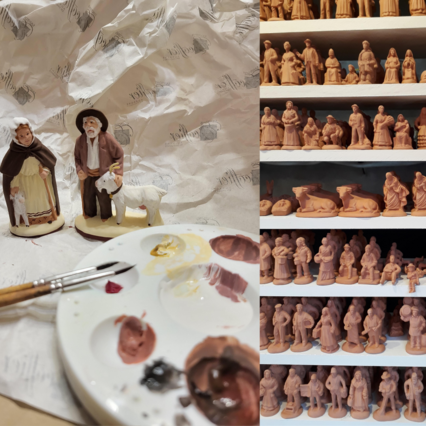
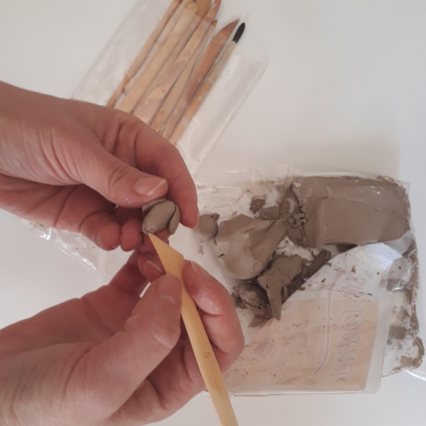
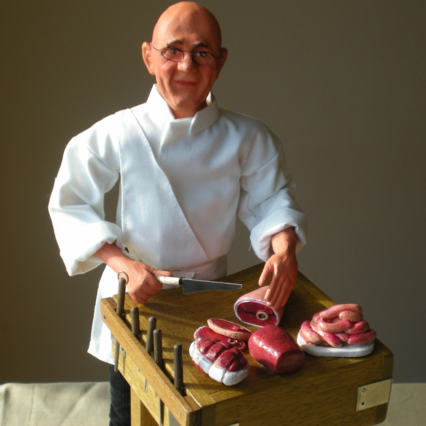
I am a children’s illustrator based in Marseille in the South of France. Although I now work digitally, I remain deeply attached to the expressiveness and imperfection of traditional materials. I started my artistic journey with sculpting traditional small clay figurines called santons that are part of Provence’s cultural heritage.
When I moved to Marseille, I was naturally drawn to the beauty of the annual santons fair. Wanting to understand this tradition more deeply, I began researching its tools, symbols, and unwritten rules. I was so passionate and dedicated to learning the craft and respecting its traditional rules that I began creating my own santons — and was soon invited to exhibit my work at several local fairs.
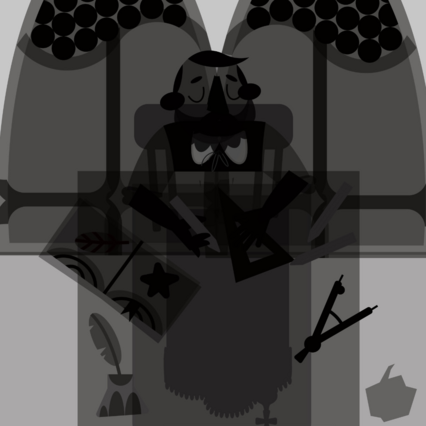
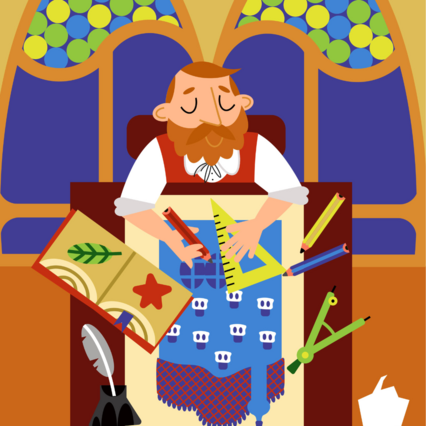
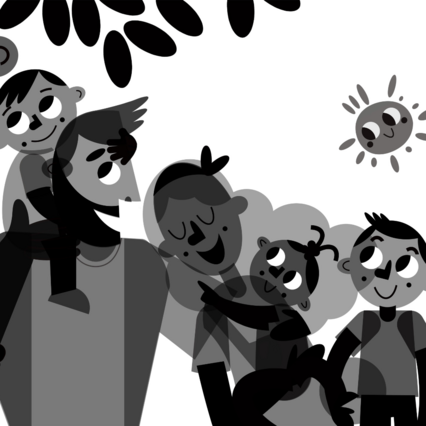
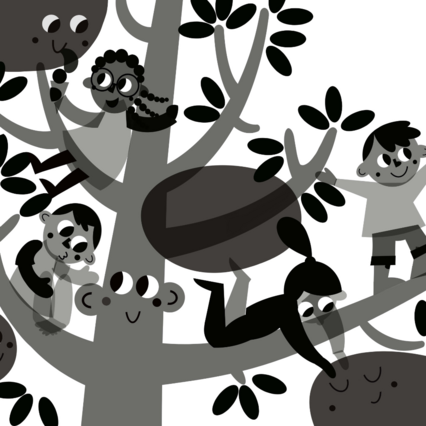
Though I no longer sculpt with clay, that experience still shapes the way I illustrate. I create my characters from small, imperfect geometric forms, which I assemble one shape at a time — just as I once added bits of clay to build a figurine. Once the overall structure is in place, I begin to color, much like painting a finished sculpture after firing.
Santon making is part of Marseille’s living heritage, but like many traditional crafts, it risks being forgotten. This thought touches me deeply — I’m especially sensitive to the idea of transmission: of knowledge, values, and culture. Children absorb much more than what is taught; they learn deeply through observation and imitation. When traditions disappear, it’s as if an entire people lose part of their roots. I collect santons and support santon makers for my personal enjoyment, and I bring the same careful craftsmanship to my illustrations — constructing them piece by piece — in my professional work.
I also believe this sculptural approach is especially relevant in children’s publishing. The way I build images with simple, rounded geometric forms creates clarity without simplifying the meaning. This style speaks naturally to young children, making it well suited for nonfiction, early encyclopedias, or educational books. But it’s just as effective for abstract or reflective texts, where clarity supports the author’s message without overwhelming it. I’m truly passionate about how these visual forms can create playful and meaningful learning experiences.
If you'd like to see more of Julia's work, you can check out her portfolio here.
To work with Julia, please contact: [email protected].
At illo agency, we pride ourselves in representing a collation of global illustrators, distinctly diverse in creativity and uniquely celebrated by like-minded clients across a range of commercial markets.